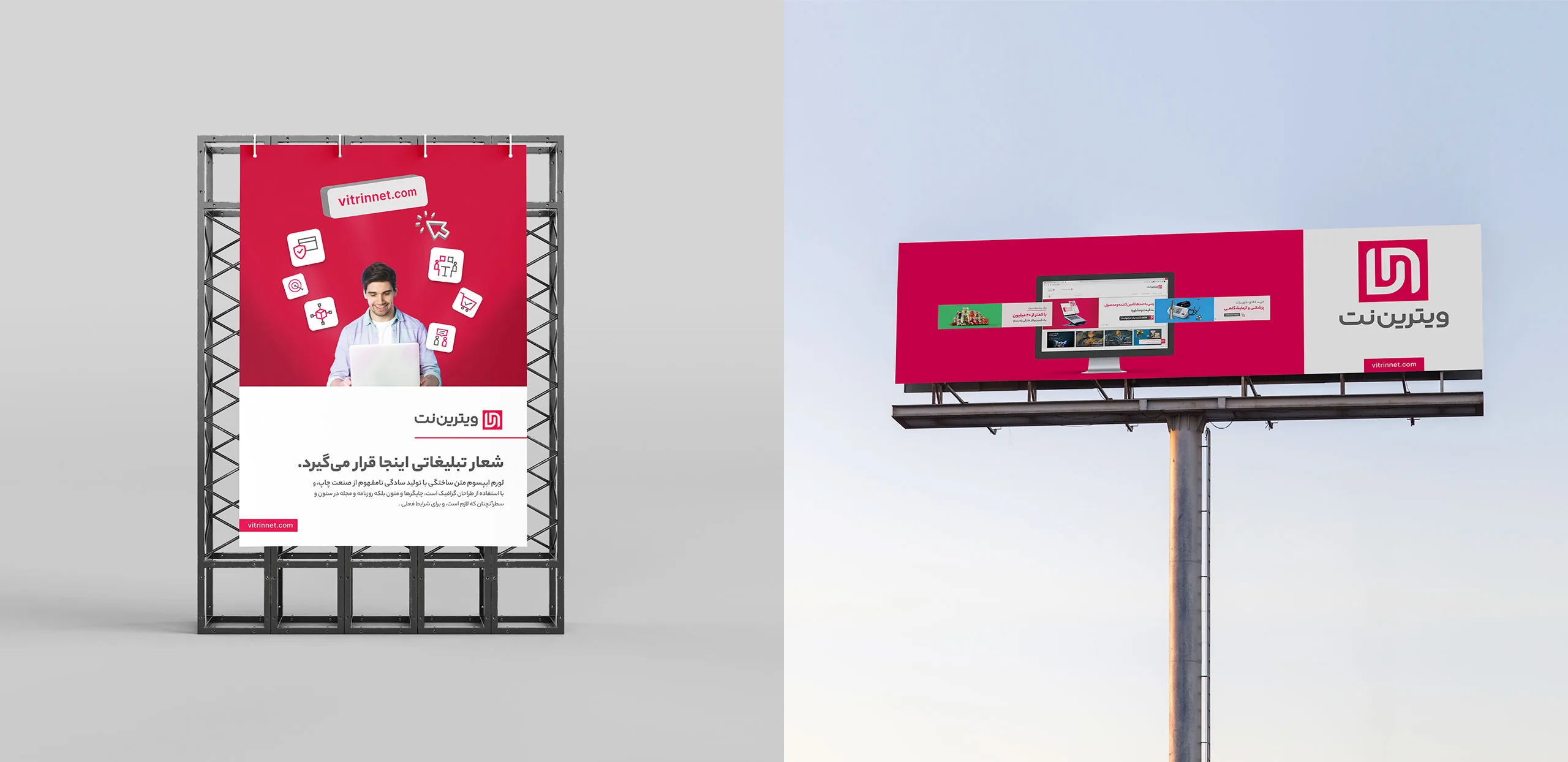
VitrinNet is a B2B online buying and selling platform that started with the sale of food and agricultural equipment, and then other related areas were added to the platform’s activities. Major changes in the revenue model, frequent changes, the lack of a specific strategy in the field of product sales, and the lack of brand awareness among the target audience were some of the main challenges for this brand in the project.
Experience
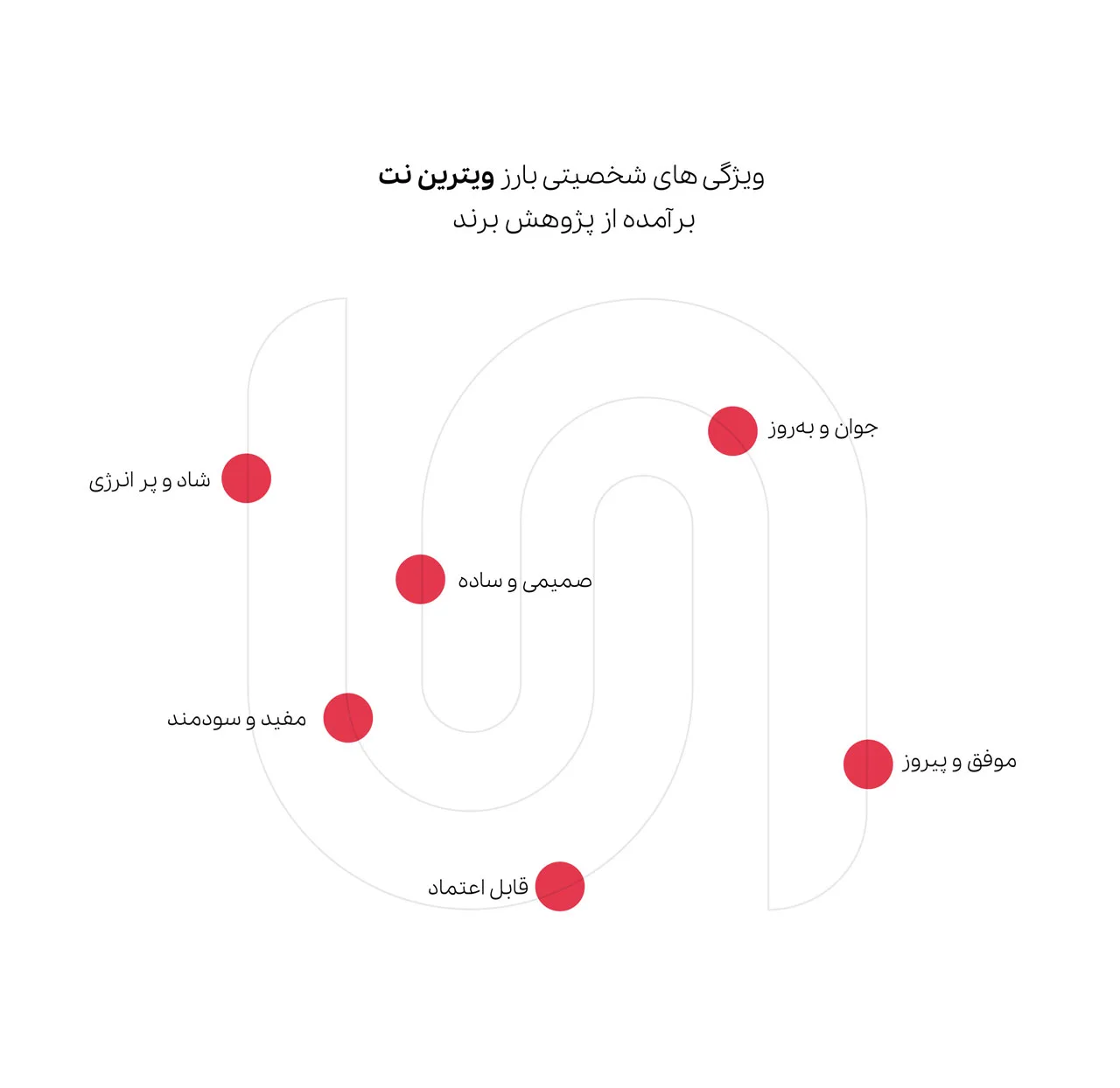
In the VitrinNet brand research phase, qualitative interviews were conducted with audience groups including senior managers, brand employees, suppliers, and buyers, and the results of the research clearly showed that suppliers were dissatisfied with the large changes in the revenue model. Buyers also felt the need to include detailed technical information, produce high-quality content, ease of working with the platform, and provide sales consulting. In fact, buyers and suppliers needed more appropriate rules and structures to reduce the risk of transactions. Given that this platform was in contact with a diverse range of audiences (suppliers and buyers), the brand identity had to be designed in such a way that the expected benefits of each group were presented correctly, and accordingly, the brand identity of Vitrine Net was designed. Then, in the brand strategy development section, the need for quality control units, providing optimal sales consulting, the existence of appropriate standards in different areas, and providing the necessary guarantees to facilitate transactions between the parties was put on the agenda.
Brand Visual Solutions
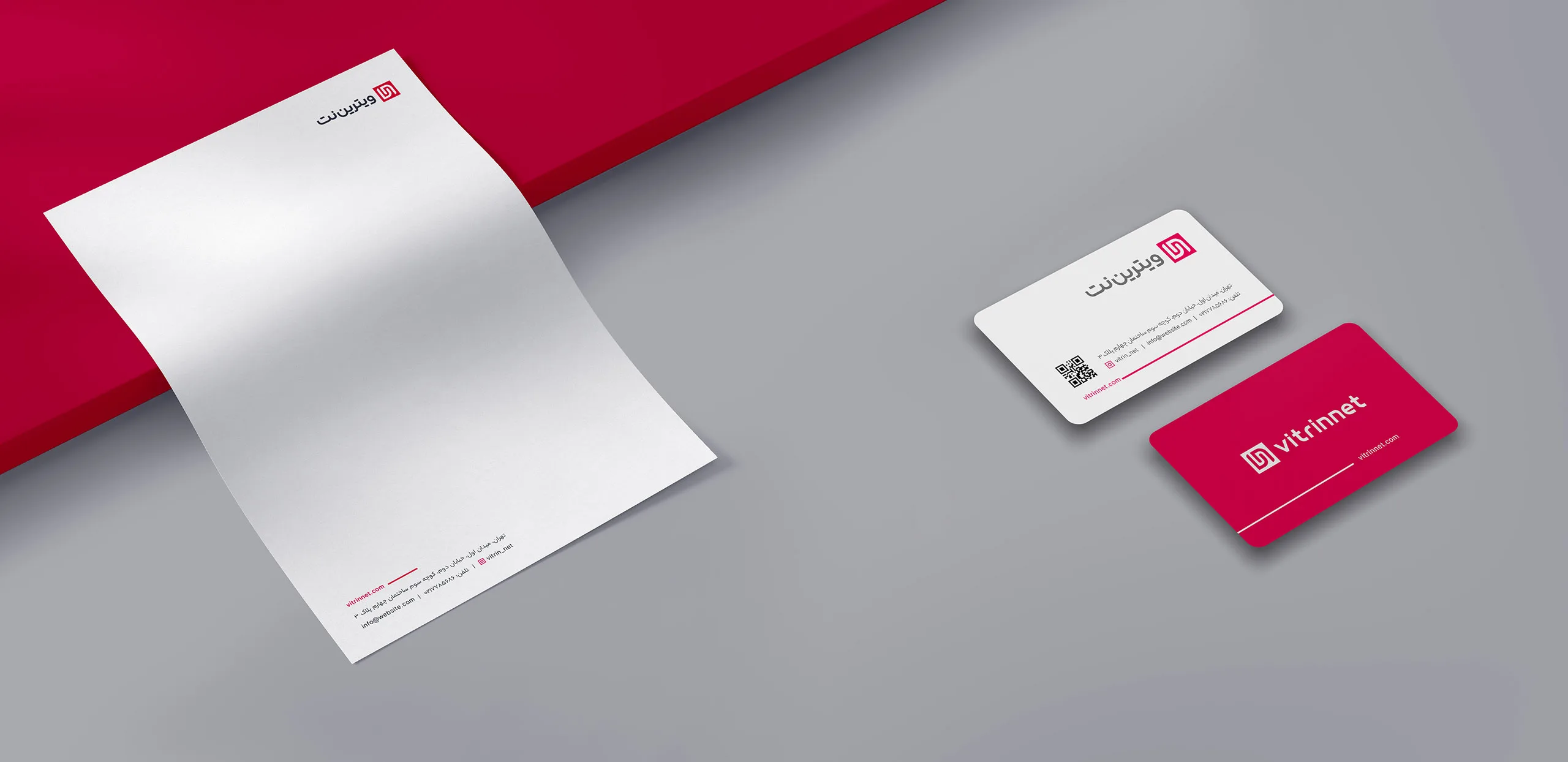
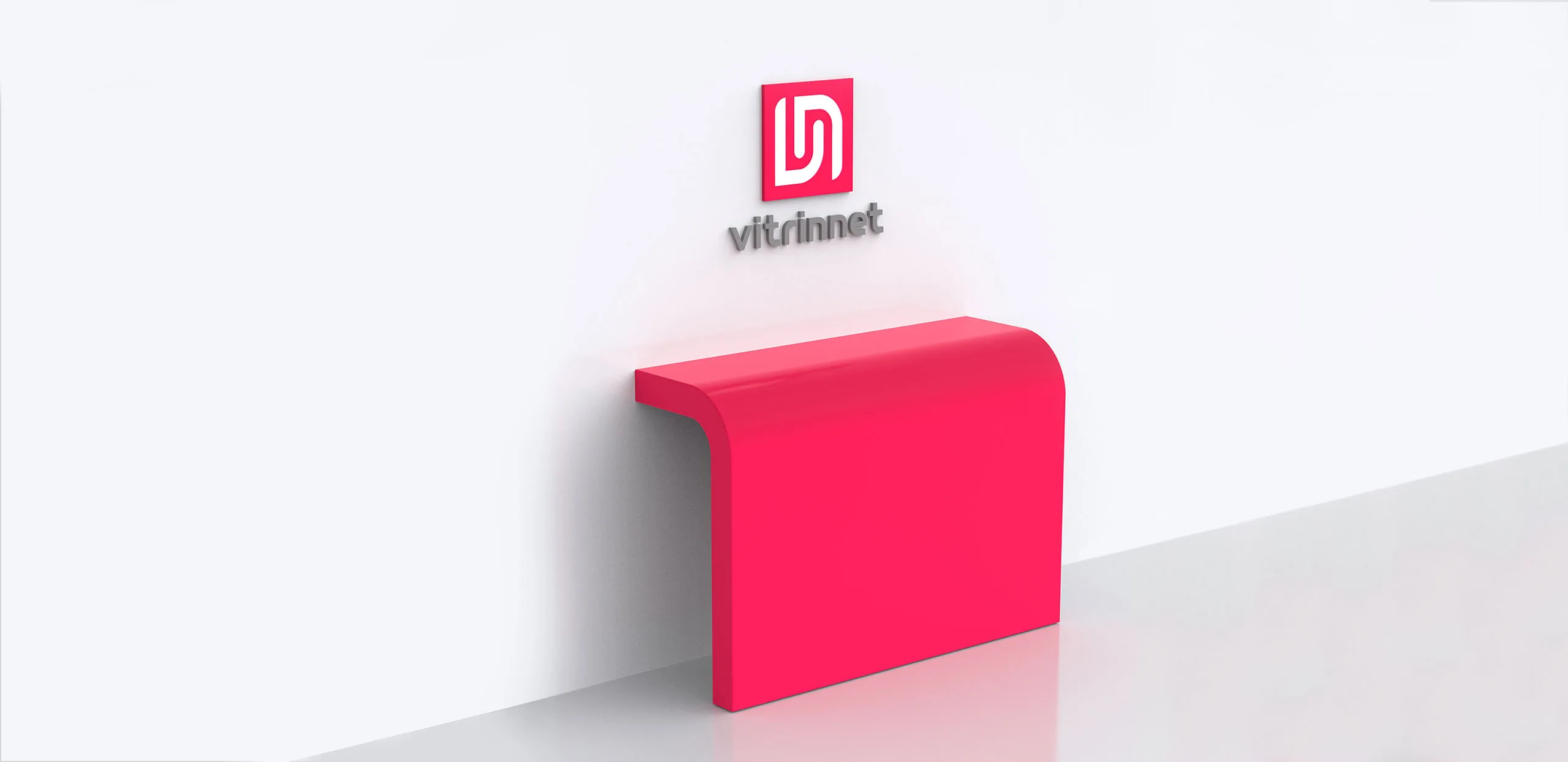
The redesign of Vitrine Net’s brand first began with modifying the logo and changing the single letters in the symbol. The form in the logo had associations with u and n, which was changed to v and n, which stood for the brand name, while maintaining the overall shape of the logo. Next, by modifying the Persian logotype and optimizing its letters, an attempt was made to increase the audience’s visual focus on the symbol.
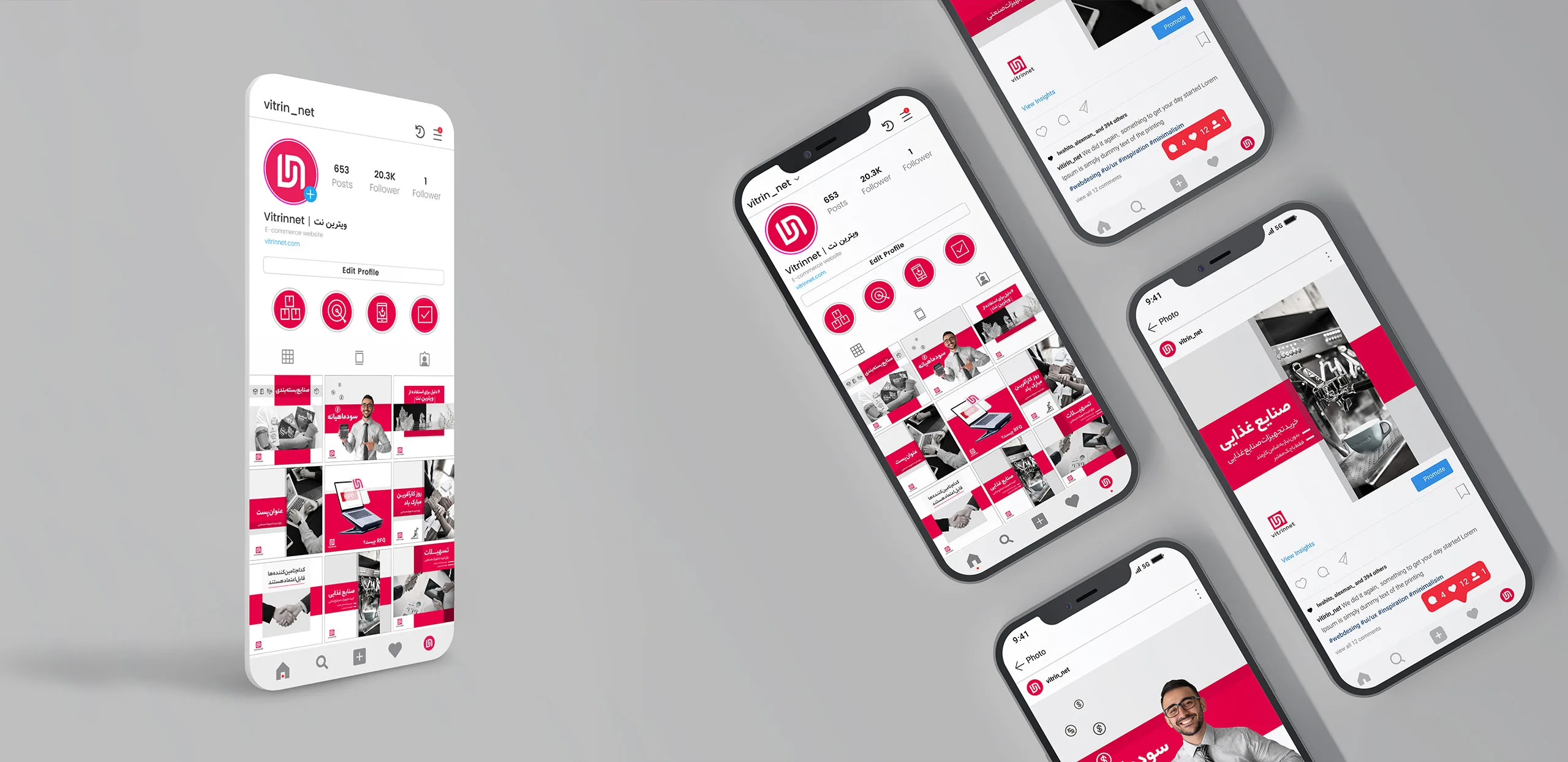
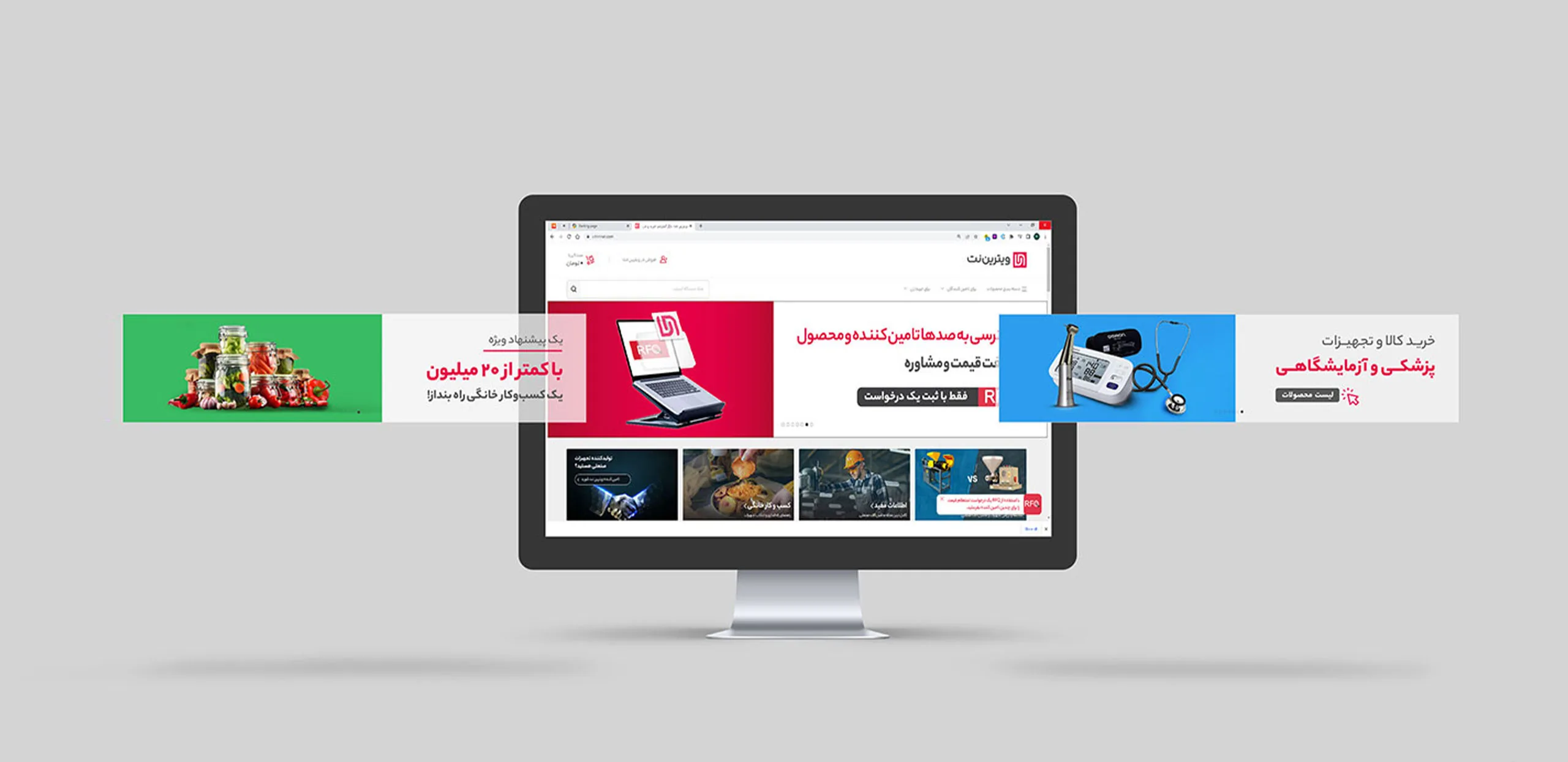
Considering that Vitrine Net was more widely active in digital spaces, these points were completely standardized in the development of the visual identity. Things like the website, social media, required brand icons, etc. were all designed and implemented as expected.